Building Smart Glasses
I have been building low-cost AI glasses to help visually impaired students hear printed classroom text and understand their surroundings audibly. Inspired by my visually impaired grandpa, our rough prototype has now grown into 30 working devices(v2), physical testing across classroom conditions, and funding from the U.S. Army and NSTA.
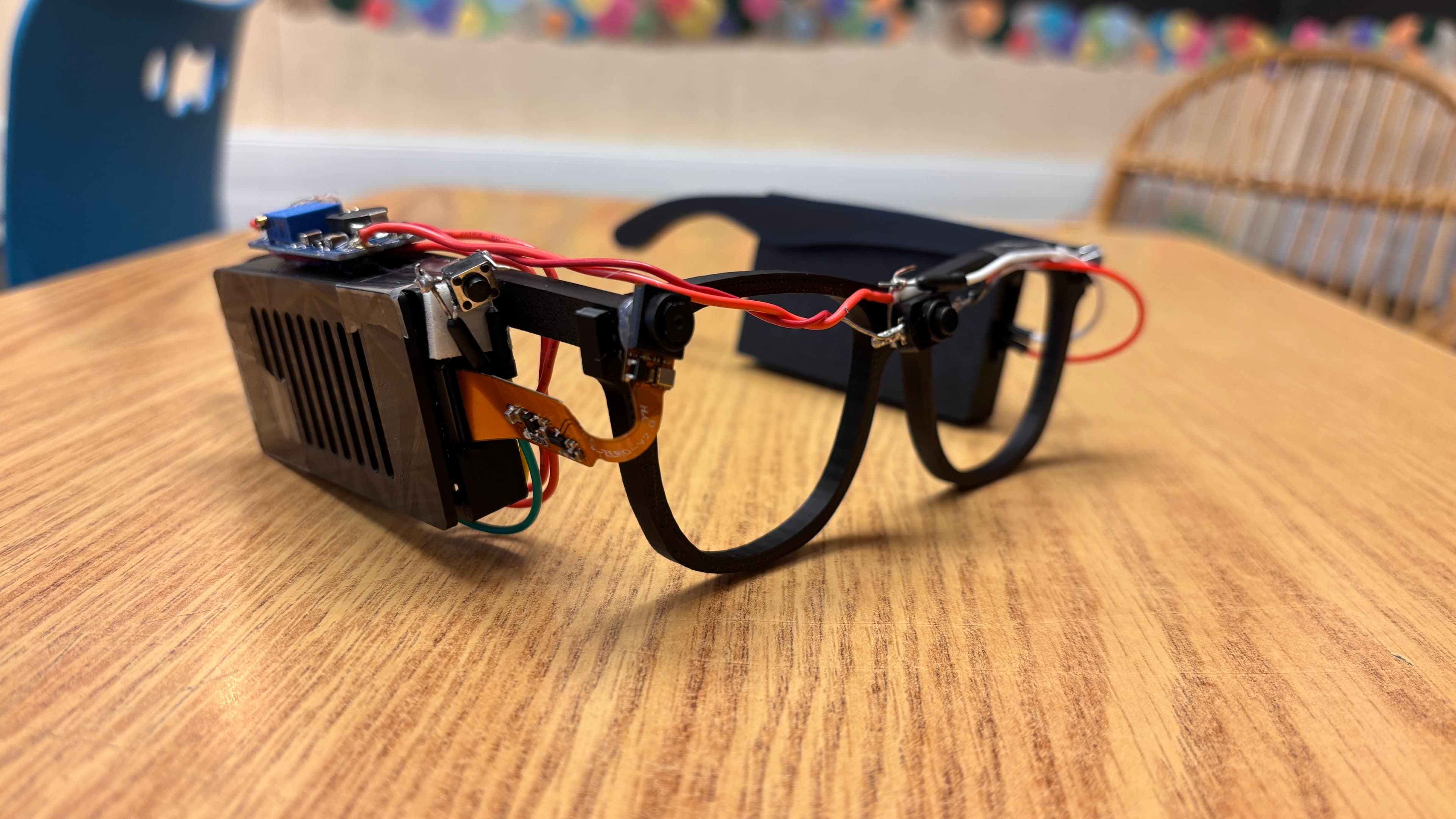
When I first started my glasses project, my goal was simple: create a low-cost wearable device that could help visually impaired students access printed classroom materials more easily. The idea was to let a student look at a worksheet, textbook, or document and hear the text spoken out loud.
The first version was not perfect. It used a Raspberry Pi, a camera, OCR software, and text-to-speech to capture printed text and convert it into audio. It worked, but it also showed me how many real world challenges existed. Lighting, font size, document quality, camera angle, and startup time all affected the results.
Since then, the project has grown a lot.
One of the biggest milestones is that we now have around 30 working devices. That changed the project from a single prototype into something much closer to a real implementation. Building multiple devices forced me to think about more than just the code. I had to consider cost, durability, reliability, comfort, setup time, and whether someone else could actually use the glasses without needing technical knowledge.
I also tested the glasses under different classroom conditions, including low light, classroom lighting, and daylight. I used different documents, including math and science materials, with a range of font sizes. These tests helped me find what works well and what still needs improvement.
The most exciting part is that the project is moving closer to real impact. With support from the AEOP grant, I am working toward a structured partnership with the California School for the Blind. My goal is not just to create an impressive project. My goal is to build something useful for real students.
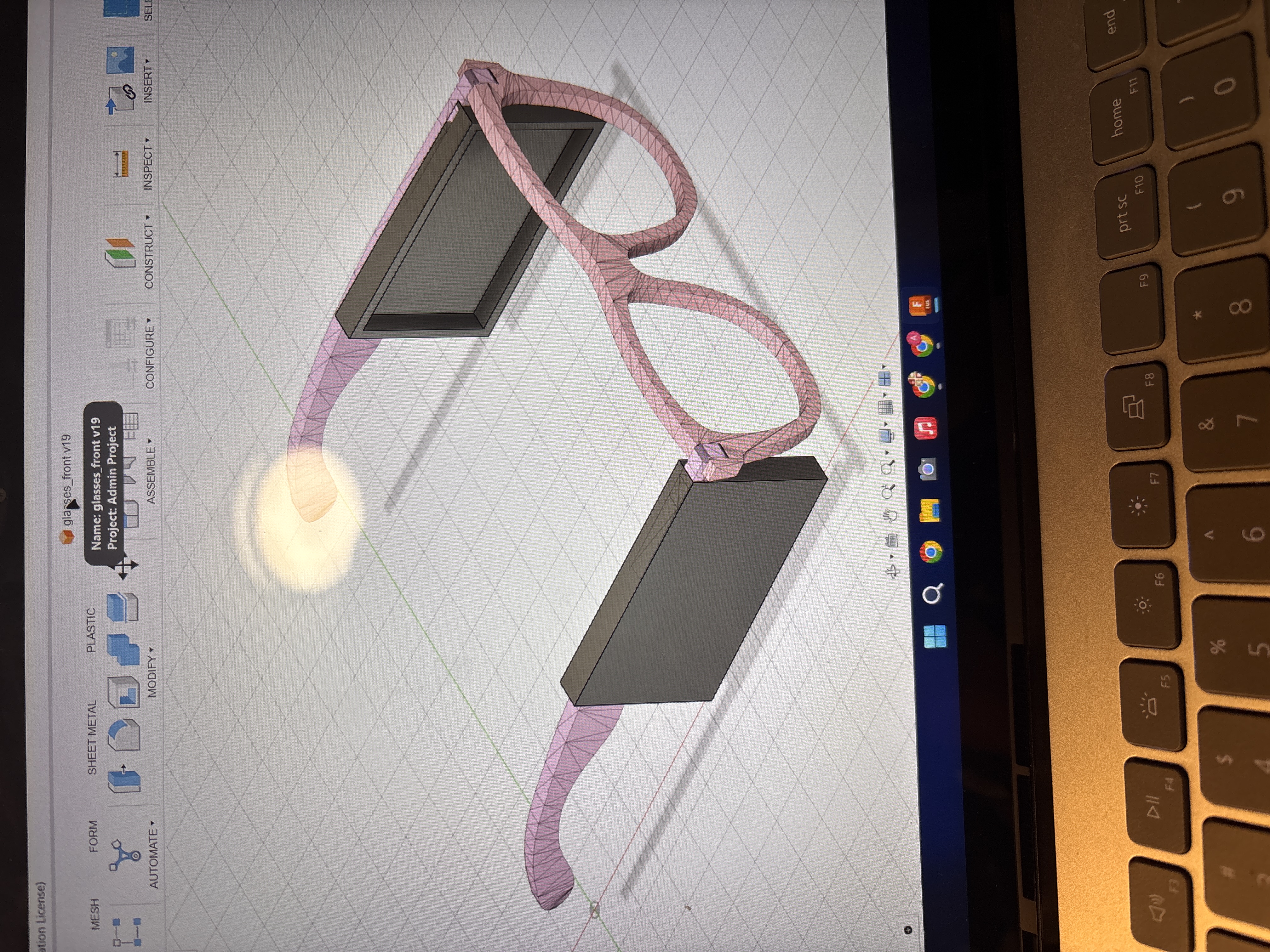
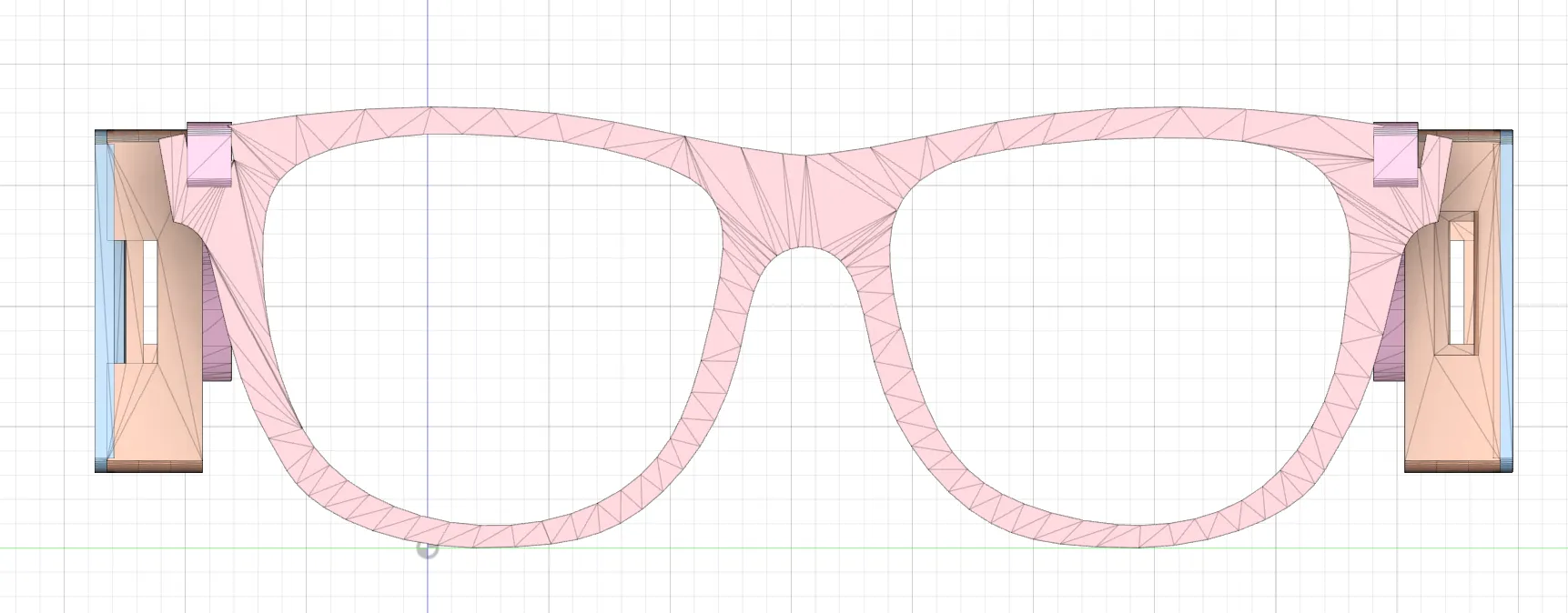
There is still a lot to improve. The glasses need to become smaller, faster, more reliable, and easier to use. I am now exploring better hardware, smaller chips, custom PCB designs, improved cameras, and more efficient ways to send data to cloud-based AI systems.
This project has taught me that a prototype only has to work once, but a real product has to work consistently for real people. That is the next stage of this project: turning working prototypes into a reliable tool that can help students in the classroom.
Images
Blog Updates
Get new posts by email
I’ll only send published build notes and project updates. No spam, and every email includes an unsubscribe link.